Wednesday, April 22, 2026

Stonetop now available for purchase

Stonetop is a “hearth fantasy” tabletop RPG set in an Iron Age that never was. The players portray the heroes of an isolated village near the edge of the known world. Their adventures focus on dealing with threats to the village and seizing opportunities. These aren’t rootless mercenaries seeking fortune and glory; they’re exceptional people, taking risks on behalf of their friends, family, and neighbors.

- from the Stonetop Kickstarter campaign 

I started posting about Stonetop on Google Plus back in 2014. My first playtest group started in 2016. We opened it up to public playtests in 2018. We Kickstarted in 2021. 

And now, finally, it's done. You can purchase it via Plus One Experience's storefront. 

image of Stonetop, Books 1 and 2 in slipcase, set on a deck railing with grass and trees in background
Proof copies of the final books (pic by Jason Lutes)


Purchasers get immediate access to the completed PDFs. As I type this, the books and slipcases are in transit to warehouses for distribution. We expect to start physical fulfillment near the end of May 2026. We expect to be fulfilling Kickstarter backers and preorders in late May and early June.  

I cannot fully express how happy I am to have this project done, or how proud I am of what we've made. Nor can I sufficiently express my gratitude for the folks that made this possible: Jason Lutes of Lampblack & Brimstone (publisher, editor, layout), Lucie Arnoux (illustrations), Tony Vasinda and Richard Rook at Plus One Experience (distribution), and the legion of playtesters, backers, supporters, and friends who kept me going. 


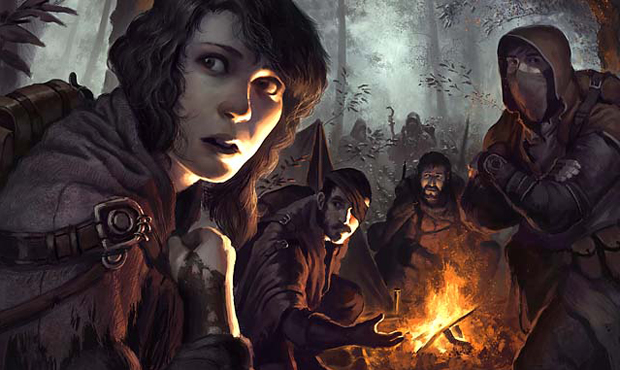
illo. by Lucie Arnoux

You can learn more about Stonetop here. 

(more photos after the break)

Friday, February 24, 2023

Playing Stonetop (and Other PbtA Games)

Work continues on Stonetop, my "hearth-fantasy" adaptation of Dungeon World set in an iron age that never was, in which you portray the local heroes of a small, isolated village near the edge of the known world. It's going more slowly than I'd like, but we just added the "Playing Stonetop" chapter to the main book, and I'm quite pleased with it. 

This is a chapter that's addressed to the players, including:

  • The Conversation
  • Your Agenda (as a player)
  • The Flow of Play
  • Dice and Moves 
  • Your Principles (as a player) 
  • Other Things to Do (and not do) 

A few of the Stonetop Kickstarter backers commented that the chapter is a good, overall introduction to and solid advice for playing PbtA games in general. Hence me reposting them here. 

I'm not about to claim that this advice is universally applicable to all PbtA games. For example, I don't think that the "Flow of Play" is the same in Stonetop as it is in games like Monsterhearts or Cartel or even Apocalypse World, which feature a lot more PC-PC drama. 

But for PbtA games where the PCs mostly work together against adversity presented by the GM (like, Monster of the Week or the Sprawl or Impulse Drive, to name a few), I do think this stuff is largely relevant. 

If you're a new player in a game like that, or a GM trying to help new players "get it," maybe this will help?  

playing Stonetop
© 2022 Lucie Arnoux, used with permission (click here for more)

Anyway, here's "Playing Stonetop".

Sunday, June 20, 2021

Stonetop Pre-Orders Available at Backerkit

 So, uh, this happened:


As we mentioned a few times in the Kickstater updates, we've been absolutely blown away by the support and the enthusiasm. 

I've been trying to focus on finishing the two books, and keeping on top of the (considerably enlarged) Stonetop community on Discord, and just haven't gotten around to posting any follow-ups here. I'll be aiming to more of that soon, as I've got a few things to talk about that might be relevant not just to Stonetop folks but to anyone who plays and tinkers with Dungeon World or Homebrew World. In particular, I plan to talk about:

  • How and why I changed the names of many basic moves
  • How and why I'm changing Drives (Stonetop's take on Dungeon World's Alignment rules) into PC Instincts
  • Stonetop's updated rules for Followers, which are iteration from those presented in the Perilous Wilds.

In the meantime, if you missed the kickstarter and would like to preorder the books or the PDF, you can do so here:


Pre-orders for the physical books will remain open until a few weeks before we go to press. If you pre-order either the physical book or the PDF, you'll get access to the current preview playkit and an invite to the Stonetop community on Discord. 

Shipping costs will be added as you check out, but for the books, they are:

  • US: $15
  • Canada/EU/UK: $22
  • Norway/Switzerland: $38
  • Australia: $25
  • New Zealand: $30
  • China, Macao, Hong Kong: $14
  • Rest of Asia: $29
  • All other countries: $70-100
Shipping costs above include customs and VAT for international customers.  

Sunday, February 7, 2021

Stonetop Kickstarter: March 1st, 2021

We're finally doing it:


Here's the teaser text:

The Stone has always been here, in the center of the village. It’s larger than life, older than anything, etched with runes. When storms roll up from the south, as they often do, the Stone pulls lightning from the sky and the village shakes with thunder. Visitors cower. The locals? They barely even notice.

You are one such local, someone who calls Stonetop home. You’re one of a handful of notables—admired, or respected, or maybe even reviled. When there’s trouble, people look to you for the solution. Or as the cause. Or both.

And right now, as the first wildflowers appear beyond the Old Wall? Trouble is brewing. The world itself is darkening, like the sky before a summer storm. Folks can feel it. They’re afraid.

These are good people, here, in Stonetop. Your kith and kin.

If you don’t step up to protect them, who will?


I've been working on Stonetop since, criminy, 2013? It started as a "playset" for Dungeon World with beefed up rules for managing the steading's prosperity. Then it became a whole slew of custom classes with a unique structure, and a bunch of creepy artifacts. And then I started tweaking basic moves, and eventually acknowledged that this was going to be a standalone game.

I've run over 75 sessions with 5 different groups. I've played in over 30 sessions myself. We've had something like 60 different playtest groups. 

And now, finally, the end is in sight. We'll be launching the Kickstarter on March 1, 2021, closing on March 31. Target fulfillment is October 2021.  

Jason Lutes of Lampblack & Brimstone will be running the Kickstarter and publishing the game. You might know Jason/L&B from The Perilous Wilds, which is where we first collaborated. Jason is also doing layout, editing, and art direction.

Illustrations will be done by Lucie Arnoux, a UK-based artist whose work includes reportage, children's books, set design, and comics. That's her work up above. Here's some more:


(details, including a sample chapter and a more art, after the break)

Saturday, December 26, 2020

Преодолеть опасность: Defying Danger, the RPG... in Russian!

Defying Danger the RPG now has the dubious distinction of having been translated more times than I've actually played it!

Alexey Dikevich recently translated the game into Russian. I don't speak Russian or read Cyrillic, so can't speak to the quality of the translation, but the layout seems solid and he's even included an translated example of play (taken from the comments on the original Defying Danger blog post). 

Check it out here:


If you have comments on the translation, or want to send him your thanks, you can reach Alexey at "adikevich" at Gmail.  

You can find the previous translations for Defying Danger here:

If you're interested in doing your own translation, and want the original .PPTX files to work from (yes, yes, I made this in frickin' PowerPoint, don't judge), then let me know in the comments or by emailing me at "jack" underscore "blackfoot" at Yahoo. 

Likewise, if you make your own translation and want me to post it here, let me know!  

Wednesday, October 21, 2020

Major Arcana: The Nhing Codex

Over on the Dungeon World Discord, Razorkiss asked this interesting question:

Imagine you're trying to model scary Mythos tomes in DungeonWorld. Y'know, we're talking about The Necronomicon here. You want to create a custom move that represents the dangers of reading it, the dangers of gaining knowledge at the expense of sanity. I feel like the first instinct would be that this is a +WIS move, because, y'know, the Will save and all of its attendant baggage. But... is that the way you'd really want to go? It's basically saying, "Y'know, Wizard, you'd think you'd be the person who would be all over this custom move, but it turns out your buddies the Ranger, Druid, and Cleric are better-suited for this job..."
When you read the obviously evil book, roll +???


Queue discussion about whether it'd be an INT roll or CHA roll or whatever.

And my first instinct was to treat it the way I treat major arcana in Stonetop. 

(discussion after the break)

Saturday, September 26, 2020

Take Watch is a bad move and you're a bad person if you like it

"Did you hear that? It sounds like... click bait!"

Strong personal opinion: Take Watch is a bad move. You don't need it. Dungeon World doesn't need it. I'd even go so far as to say that it is antithetical to the rest of the game.    

Just to be clear, I'm talking about the bog-standard version in the original Dungeon World text. This one:

When you’re on watch and something approaches the camp roll+Wis. * On a 10+ you’re able to wake the camp and prepare a response, the camp takes +1 forward. * On a 7–9 you react just a moment too late; the camp is awake but hasn’t had time to prepare. You have weapons and armor but little else. * On a miss whatever lurks outside the campfire’s light has the drop on you.

It breaks the usual flow of the game. It doesn't add much of anything to the fiction, and what it does add presumes more than it should about how any given PC will react in every situation. (A full explanation, and what to do instead, after the break.)

Saturday, July 4, 2020

My recipe for starting adventures

I've got a little process that I use whenever I start a game of Dungeon World or Homebrew World. It's similar to the first session procedure that's described in the book, but different in some key ways. I've found that this approach reliably kicks off a new game quickly and with a lot of energy, in a way that makes it pretty darn easy to run and improvise.  

Here's the recipe:
  1. Establish the adventure's premise with the group
      > Premise = a fantastic location + a grabby activity
      > Do this before anyone picks playbooks or makes characters

  2. Players create characters, GM writes/updates hook questions, which should establish:
      > Motive: why are they here, doing this?
      > Stakes: what's on the line, why is this important?
      > Urgency: why shouldn't they dawdle?
      > Dangers: what do they expect to face? what do they know about them?
      > Detail: what specifically are they hunting/seeking/fleeing/fighting/etc.?
      >
    Complications: what's getting in the way? making it harder? constraining them?

  3. Do introductions (by name, pronouns, class, and look).
      > Do not do bonds (or in Homebrew World, background questions) just yet. 
      > You're just establishing who the characters are.
      > Yes, you can ask questions, but keep it light for now.

  4. Ask a few of your hook questions
      > Usually 1-3
      > Pick questions that elaborate on or clarify the premise
      > Address specific PCs, not the group at large
      > Ask follow-up questions; encourage the players to do so, too!

  5. Do bonds (or in Homebrew World, background questions)
      > Ask follow-up questions; encourage the players to do so, too!
      > Use this to establish how they know each other, why they're working together

  6. Finish asking your hook questions
      > Doing bonds/background questions often rolls naturally into this
      > Ask follow-up questions; encourage the players to do so, too!
      > Ask additional questions as they occur to you

  7. Frame the initial scene, tightly
      > Start in media res or at least right on the verge of action
      > Who, where, when, doing what?
      > Give up to 3 strong impressions, ideally from different senses
      > Make a soft GM move
      > "What do you do?"

That's the recipe!  More about the background, details, and suggested prep after the jump break.

I keep hearing good things about Delicious in Dungeon,
but haven't read it; just seemed appropriate, y'know? Cuz recipes.


Thursday, May 7, 2020

Desafiando o Perigo

The coolness continues!

Frederico Fiori (a.k.a. /u/pidin on Reddit) translated Defying Danger into Brazilian Portuguese. As I speak no Portuguese, I can hardly comment on the quality of the translation, but the layout is slick!

I'm rather shocked that both this translation and Francesco's Italian one managed to make everything fit in basically the same space. I tend to fill my projects' layout to bursting, with lots of thought given to cutting words and making each line "fit." That's hard enough to do in English (o scavenger of words! o lexicographic bone-picker!), which often has a dozen ways to phrase any thought, many punchy and short. The romance languages always struck me as having longer, more flowing words and phrasing, so it impresses me to see translations of this game squeezed into the limited space.

Anyhow, here's the goods:

click for PDF

Frederico actually sent me this almost a month ago, so I feel bad for just now posting it. I'd like to blame the pandemic, but, really, I'm just sometimes a bit of flake.

Anyhow, I'm sure Frederico would love to hear about it if you use his translation. You can contact him on Reddit or via email at "hayako" at protonmail dot com.

Friday, March 27, 2020

Sfidando il Pericolo


Well this is all sorts of cool.

I got an email out of the blue from Francesco "Checco" Catenacci, who stumbled on my game Defying Danger and translated it into Italian.

Click to see it!

Francesco also pointed out a few typos and whatnot in my original draft, prompting me to update it. Nothing major, but the current version is now just a little better. Grazie Francesco!

If you use Francesco's work, I'm sure he'd love to hear about it. You can contact him at checco at tutanota dot com.

Divertitevi!

Sunday, March 22, 2020

Running Fights in Dungeon World & Stonetop

I've been working on the GMing chapters for Stonetop, and recently finished the "Dangers" chapter. Part of that chapter is a section on "Using Monsters and Running Fights." It's a distillation of procedures, advice, and wisdom that you'll find floating around the Dungeon World community, but that isn't really specifically laid out in the DW text. 
If you've been GMing Dungeon World (or any of its hacks) for a while, you probably know all of this already. I'm mostly posting this for newer GMs, or those who've been running the game but still feel uncertain when fights break out.  
Some caveats:
  •  The Multiple Combatants and Abstracting Groups sections assume that you're using an updated version of the Follower rules originally presented in the Perilous Wilds. In Stonetop, Followers can make the same moves that PCs do (like Defy Danger or H&S), but the roll either +0, +1, or +2 depending on their tags and you might have to Order Followers to get them to do things.  Expect a future blog post on that!
  • You'll see references to GM principles, moves, and agenda items that are slightly different from those of core Dungeon World. I trust you can see the parallels. It definitely assumes that the GM move "Deal Damage" has been replaced with "Hurt Them" 
    Okay, let's do this. As always, questions and feedback are appreciated!

    Introducing Monsters

    Whenever it’s time to make a GM move, you can introduce a danger and put a monster in the scene.

    Don’t worry about your monsters being “fair fights” or “balanced encounters” or something that the PCs can even defeat. Worry about your monsters making sense. Portray a rich and mysterious world, right? If it makes sense for the PCs to stumble across a pair of (extremely dangerous) thunder drakes, go for it. Then play to find out what happens.

    Exactly how you introduce a monster will depend on the situation, the monster’s tags and qualities and moves, and the actions of the PCs. “Obvious” monsters encountered in a wide-open space will give the PCs plenty of opportunity to plan and react. Stealthy monsters in a dark, cluttered space while the PCs stumble around in torchlight? Not so much.
    ------------------ 
    The PCs are up in Gordin’s Delve trying to trade off some valuables they found in the Green Lord’s tomb. Rhianna’s off talking to a contact. Vahid, Caradoc, and Blodwen are at a pub. Caradoc and Blodwen get up to leave, and Vahid sees a couple of unsavory types get up and follow.
    Now, if these guys are just a pair of local miners that Caradoc managed to tick off, then I’ll introduce a danger and let the PCs see them coming. “About halfway back to your hostel, you realize that you’re being followed. It’s those guys from the pub and they look pissed. What do you do?” The PCs have all sorts of options—they might try to lose them, or set an ambush, or talk, or whatever. 
    But if these bad guys are stealthy cutthroats who regularly murder unwary travelers in alleys and loot their corpses, then I’ll be much more aggressive about it. I’ll start by hinting at more than meets the eye. “You find yourselves in a dark, empty little trash-strewn square, and everything’s quiet. Too quiet. You feel like you’re being watched. What do you do?” 
    Let’s say they Discern Realities, roll a 7-9, and ask, “What should I be on the lookout for?” I’d say “You’re pretty sure someone’s following you, or maybe circling ahead. And these alleys are a filled with good spots for an ambush. What do you do?” Whatever it is, they’ll be on guard. My next move will probably be to introduce a danger, but softly and with a chance to react. “As you pass a dark side-alley, two thugs rush out towards you, what do you do?” 
    But suppose they Discern Realities and get a 6-, or just ignore my veiled threat and blunder on. In that case, I’ll introduce a danger hard and painfully. “Caradoc, this guy comes out of a dark side-alley and snags your right arm, twists, and shoves you face-first into a wall. Take 1d8 damage. Blodwen, you see a second guy step forward, sneering, a glint of metal in his hand. What do you do?”
    ------------------


    These two guys follow you into an alley...
    (more after the jump-break)

    Thursday, February 27, 2020

    "Discern Realities" in Stonetop & Homebrew World

    Discern Realities is a move that is near and dear to my heart. It's one of my favorite moves, and I've written about it at length: I tried using that "make the question part of the trigger" approach to the move a couple times, but didn't really like how it worked in practice. Either the players had to keep the questions constantly in mind and intentionally ask them, or as the GM I had to keep them constantly in mind and watch for the players asking them. Also, a lot of my playbook moves add questions you can ask to Discern Realities "for free, even on a miss" and those don't jive well with the "ask first" approach.  
    So, for Stonetop and Homebrew World, I use Discern Realities as follows. It's quite similar to the original, the key differences being:
    • the trigger specifically includes "looking to the GM for insight"
    • both games use advantage/disadvantage instead of +1/-1 forward
    • "Who is control here?" has become "Who or what is in control here?" (with "their fear" or the like being legit answers)
    The accompanying text is the first draft of what I plan to put in the Stonetop book. It'll probably get cut down a little to fit on one spread, but this is the text that I wish I had when I first started learning to run Dungeon World. I hope you find it useful, too. 
    ----------------------------------- 

    Discern Realities 

    When you study a situation or person, looking to the GM for insight, roll +WIS: on a 10+, ask the GM 3 questions from the list below; on a 7-9, ask 1; either way, take advantage on your next move that acts on the answers.
    •   What happened here recently?
    •   What is about to happen?
    •   What should I be on the lookout for?
    •   What here is useful or valuable to me?
    •   Who or what is really in control here?
    •   What here is not what it appears to be?

    Player: "Uh... what should I be on the lookout for?"
    GM: "Well, funny you should ask..."
    (image by Jakub Rozalski)

    Thursday, February 13, 2020

    Defying Danger, the RPG

    Here's a thing I made, as a bit of a distraction from working on Stonetop. It's a light-weight RPG, in the vein of World of Dungeons.

    click for current version

     The highlights:

    • There's only one "basic" move, Defying Danger. The usual 10+, 7-9, 6- framework. 
    • No stats (like, no STR, DEX, CON, INT, WIS, CHA).  Instead, you choose 2-3 ways of Defying Danger where you roll 3d6 and keep the best 2 dice. Any other time, you roll straight 2d6.  
    • Each class has an additional move, that indicates a thing they're generally better at.
      • A warrior gets Hack & Slash
      • A rogue gets Manipulate
      • The wizard can Get Answers 
    • Each class has a spendable resource (Mettle, Cunning, or Power) that lets them boost rolls or do cool stuff. Wizards, in particular, use this to cast spells. 
    • PCs don't have HP, per se. Harm is closer to Apocalypse World, but the players have a little more control over how, exactly, they get messed up.  
    • Gear is very similar to the system in Homebrew World, but even more simplified. 
    As of this posting, Defying Danger is a completely un-playtested game. I don't know if any of this actually works!  It's basically an idea that spawned from a conversation on the DW Discord--an idea that got lodged in my brain and now, a week later, here's a game. Enjoy!

    If you play this, please let me know how it goes. In the comments below, over in the DW Discord, or at jack underscore blackfoot at yahoo.

    EDIT to add: 

    Sunday, January 26, 2020

    "Parley" in Stonetop and Homebrew World

    In both Stonetop and Homebrew World, I've rewritten the Parley move to be at least as much of a "gather info" move as a "convince them" move. What follows is the text of the revised move and a draft of the "discussion" write-up for Stonetop.  

    The evolution of this move was... involved. It started with a post from Johnstone Metzger (a very sharp dude whose stuff I strongly recommend), which was sadly lost to the Google+ vortex. If you're interested, you can read through the various drafts (and surrounding discussion) here:


    My gripes with the standard version of Parley boil down to:

    • The trigger ("When you have leverage on an NPC and manipulate them...") requires too much processing and too many decisions. By the time we've figured out whether or not the PC's action counts as leverage, the roll feels superfluous or (worse) contradictory.
    • The 10+ result and the 7-9 result often just don't work in the kinds of situations that adventurers find themselves.  At least, not without elaborate mental gymnastics.

    Ultimately, what I like about the Stonetop/HBW version is that:

    1. It's easy to recognize when a PC is pressing or enticing someone, and from there whether a roll is necessary.  You don't have to consider "is this leverage?" You just consider "are they resisting?" 
    2. The question posed by the move isn't usually "will they do what you want?" but rather "what will it take to convince them?" The move is basically an opportunity for you to tell them the requirements, and in so doing, reveal the NPC's personality and motivations.  
    3. The 7-9 results are quite easy to work with. I'm particularly fond of the "distasteful" option.
    4. It's very flexible, and works in a wide variety of situations. 

    Also, these revisions led to a PC-v-PC approach that I think works pretty well.  


    Parley (vs. NPCs)

    When you press or entice an NPC, say what you want them to do (or not do). If they have reason to resist, roll +CHA: on a 10+, they either do as you want or reveal the easiest way to convince them; on a 7-9, they reveal something you can do to convince them, though it’ll likely be costly, tricky, or distasteful.

    Saturday, January 18, 2020

    42 Minor Magical Items, Thief Edition

    I had just downed a coffee stout and a bunch of cookies last night, so I was feeling both wired and unfocused. That's my perfect state for brainstorming, so I challenged the DW Discord to help come up with 40 minor magical items for thieves.  We got 41 in 39 minutes. (#42 came to me while I was compiling this list.)

    Here are the fruits of our tipsy labor. Attribution given for each; if there's no attribution, it was mine.


    1. A vial of ink. When you write something with the ink, say someone’s name. Only they can see the writing.
    2. A worn leather purse. No one ever notices it or pays attention to it unless they see you open it.
    3. Sticky gloves. When you touch something smaller and lighter than your palm, wrap your hand around it and cross your fingers - it sticks until you cross your fingers the other way. (Caiphon)
    4. A pair of gloves. Whenever you touch something magical while wearing them, the magic thinks you’re whoever you last shook hands with while wearing the gloves.
    5. Whisper powder. Spread it around in a circle. Noise made inside the circle is never louder than a whisper to anyone outside the circle.
    6. Letter-opener. First, spread it over a piece of writing like you're spreading butter. Then, open a letter - the opened letter becomes a copy of the original piece of writing. (Caiphon)
    7. Incongruous Hat. While you wear this hat, any stranger who sees you will remember the hat (and your features) differently.
    8. Dagger of Silent Death. This stiletto completely silences anyone's whose flesh it pierces. No more screaming guards! (Marcus)
    9. Sculpting putty. Shape this soft putty however you like, then tap a special tuning fork and touch it (still vibrating) to the clay. The clay sets hard in exactly its current shape, as tough as strong ceramic. Another touch from the tuning fork shatters it.
    10. Thorn rope. Twist one end of this rope, and the fibers become razor sharp, making it deadly to climb up or slide down. (Caiphon)
    11. Second Story Shoes. These comfortable loafers let you jump great vertical distances, perfect for getting to those second story balconies. Warning: they provide no protection from falls, nor do they make it easier to jump down from great heights. (Marcus, w/edits)
    12. Affinity box. Anything you place in the box will be considered extremely valuable and desirable by anyone other than you.
    13. Chewie Manacles. Normal manacles, but they pop open with a guttural command word.
    14. Nightlight. This small lantern glows with a dim purplish light which is only visible to the one holding the lantern. (Marcus)
    15. Sleepytime Flute. Playing a soft tune on this instrument for a few minutes will lull everyone nearby into a light slumber. They're easily awoken, and you feature prominently in their dreams. (Marcus, w/edits)
    16. Fire moth. A little jar holding a tiny, mostly tame fire elemental. Will flit around you and generally go where you please. Doesn’t usually set very much on fire. Usually.
    17. Dominoes Mask. While you wear the mask, you can always ask the GM "How can I get out of here?" and get an honest (though perhaps convoluted) answer. Gain advantage on your next roll (or take +1 forward) to act on the answer, but only if you do so in an audacious or spectacular  manner. (Caiphon, w/edits)
    18. Bug shoes - shoes that allow you to stick to the ceiling, if you can get up there... (Mangofeet)
    19. Deck of useless items. Shuffle the deck, draw a card. Its face displays some unlikely, generally worthless mundane item. Tear the card in two and the item appears in your hand. A replacement card magically appears in the deck, but it will never show the same item twice.
    20. Talk-pick. Place this lock pick in a lock, and spend a minute whispering words of encouragement - it will pick a non-magical lock hands-free. (Caiphon)
    21. Taster Demon. A very small demon, like a grumpy slug with teeth. Lives in a vial. A connoisseur of poisons, it knows them all by taste or scent and will happily tell you all about them. Much louder voice than you'd expect.
    22. Catching mitt. Throw this glove at anything flying towards you, and it will catch it and fall gently to the ground. (Caiphon)
    23. Hand of glory, lesser. A candle made of a hanged criminal’s hand. Carry it while lit, and no one will notice you as long as you move slowly, make little noise, and don't touch anything. (Dialas the Spellbreaker, with edits)
    24. Hand of glory, greater. Carry it while lit, and everyone in its light except you is paralyzed.
    25. Weighted Dice/Rigged Deck. This normal-looking gaming accessory returns whatever result the owner wills. (Marcus)
    26. Trick pockets. Whatever you put in one pocket can be pulled out of the other. Yes, you can remove them and sew them onto different articles of clothing.
    27. Signal whistle. A whistle and earring set. Only someone wearing the earring can hear the whistle. (Toasters)
    28. Listening wire. A spool of enchanted copper wire. Wrap one piece around your ear, and then around your midsection. When you speak the command word, it records the next few minutes of conversation. Each strand can store only one conversation. (Caiphon)
    29. Gem of thought-storing. A semi-precious stone that you can whisper thoughts or memories into. You forget them until you hold the stone and ask for them back.
    30. A deck of playing cards. Playing games of chance with them reveals players' secret plans (via interpreting the cards they are dealt). (Caiphon)
    31. Stubborn twine. Animated, unbreakable, uncuttable. Smart as a three-year-old. Can talk, has many absurd or backwards opinions.
    32. Doorvish Ale. Break this bottle on a door, then drink as much as you can from the spill. You'll cough up a key to the door. (Caiphon)
    33. Purple lipstick, made of powdered oblivion moss. Kiss someone while wearing it and they forget something they were just thinking about. You learn it.
    34. Ear Worm. You put this worm in your ear and it sings a super catchy tune that you can't help but dance to. The benefit comes from the fact that this dance makes you uncannily good at dodging traps and attacks as you bob and weave to the beat. (Marcus)
    35. A pair of corks, each with a different rune. Anything in a bottle sealed by the first cork will seep into the bottle sealed by the other.
    36. Dupli-dice. Anything you place as a bet with these dice is duplicated after the roll. Weighting the dice breaks the spell. (Caiphon)
    37. Shadow gossamer. A small bundle of fine gauzy black silk. Unfurl it and it becomes an area of extra dark shadows.
    38. Ring of 1001 keys. Fits in a pocket, only seems to have like 10ish keys at once, but there are many, many more.
    39. Spy shell. Say one magic word and this conch shell starts to record what it hears. Say another, put your eat to it, and it plays it back.
    40. Passwall Chalk. Drawing a portal (circle, doorway, etc) on a wall creates an opening that persists just long enough for one person to jump through. (Marcus)
    41. Distraction in a box. A little music box. Crank it and leave it somewhere. After awhile, it starts making noises that sound like (roll 1d6): 1. a riot starting; 2. insults; 3. guards calling alarms; 4. a woman shrieking for help. 5. A large animal roaring. 6. GM makes something up. (Dialas the Spellbreaker, with edits)
    42. Swindler's Purse. Finely embroidered with silken thread, in patterns that are never the same. Put something in the purse. When you pull it out, it will appear to be something else of similar size and weight, something of considerable value. You have no control over what it will be. The illusion lasts until you tell a lie.

      -BONUS late addition-
    43. Sleeve Snake. A small magical serpent-construct that hides in your coat or under your shirt. Swallows small objects (coins, gems, etc.) that are slipped up your sleeve. Can spit them back out on command, in reverse order (last item in, first item out).  (Jimmeh, w/edits)

    Saturday, January 11, 2020

    My Framework for GMing Dungeon World

    I've been working on the GMing chapters for Stonetop, and it's made me think about how the conversation really flows. I've also been thinking about GM moves, and Principles and Agenda, and how they all work together. I thought I'd talk about them a little here. 
    I don't think that what follows is fundamentally different than what the game text tells you to do. Like, if you read the DW text and the DW Guide, and GM the game enough, I think you end up doing what I describe below. This is just how I conceptualize it, with 8+ years of experience running, playing, and talking about DW and similar games. (This is also pretty similar to what I describe here.)
    Maybe you'll find it useful? Maybe a new GM will find this and something will click for them. Regardless, I'm going to be posting some excerpts from the Stonetop GMing chapters over the next couple weeks, and I think this will help set the stage. 
    As always, feedback and questions are appreciated!

    The Game is a Conversation

    You say something. The players say something. You say something in response. You ask questions of each other, clarify, interrupt, talk over each other. To quote Vincent Baker: "you take turns, but it’s not like taking turns, right?"

    The whole point of this conversation is to create the fiction, the shared imaginary space that we're all talking about, where the PCs and NPCs and monsters all exist and act. The game's rules mediate the conversation, and help us figure out what happens when there's uncertainty, and help introduce unexpected and challenging elements into the game.   

    Dungeon World is (despite what some folks will tell you) a rather traditional RPG. It structures the conversation and assigns responsibilities and authority in a very familiar way: 
    • The players are responsible for portraying their characters (who they are, their actions, their thoughts and opinions, their experiences and backstory). 
    • The GM is responsible for portraying everything else: the world, the NPCs, the monsters, etc. 
    Dungeon World is different than a lot of RPGs because it explicitly encourages (and arguably requires) the GM to ask the players for input on the world, particularly during the first session and about areas where their characters have experience or expertise. But that's not that different than how lots of folks play D&D. (Ever done a session 0 where you make characters, talk about backstory and the kind of setting you want to play in? It's like that, but it's done during play.)

    Different groups take this collaborative spirit to different degrees. Some DW GMs are very cognizant of The Line (I know I am) and avoid asking the players to make up details about what their characters are experiencing on the spot. Other GMs will actively ask the players to make up details about the room they've just entered, or the NPC they've just met, or what happens next. Some groups collaborate on where the story should go, and what kinds of scenes they want to have. None of these are wrong. They're just a matter of taste.

    Friday, October 18, 2019

    Step-by-step: how to write up a front


    This post was originally a conversation on the Dungeon World Tavern back in Google+. Bryan Alexander said "Let's talk about Fronts and Dangers and Grim Portents... you start!"    
    Later in the conversation, Bryan said "Honestly, I'm struggling a bit with understanding it myself. I've reread the chapter three times now and it isn't really clicking. We are three sessions in and while I have several ideas and things that tie into each other--I’m not quite sure how it is supposed to come together in terms of how the book says to do it."
    And, yeah... Fronts are one of the chapters that folks in the DW community regularly point to and say "this could be easier to understand."  So here's my answer to Bryan, regarding how to proceduralize it.  Maybe you'll find it useful, too? 

    From 20 Dungeon Starters (Marhsall Miller, Mark Tygart)

    After your first session (or maybe two):

    Dangers

    1) Look at the fiction already established, and identify the dynamic actors, the people or things that will move forward and adapt and pursue an agenda: the rival adventurers pillaging the dungeon; the abusive lord looking to increase his power; the goblins trying to defend their home. Each is a Danger.

    2) Look for fragile, untenable, unstable circumstances. Like a crumbling dungeon holding a slumbering terror, a village simmering with resentment at its abusive lord, a disease or curse poised to sweep through the land. Each is a Danger, though maybe not yet active. Consider putting a “face” to each of these dangers, like the rabble-rousing matron who’s had enough or the spirit of the restless priest-king buried in the tomb.

    Wednesday, July 24, 2019

    More noodling on Stonetop's gear & inventory system

    We've now gone through about a dozen sessions with the current version of Stonetop's inventory system, and I'm... dissatisfied.

    I'm leaning strongly towards something more like what I'm using in Homebrew World, something like this:


    Some background... how'd we get here?

    The gear lists (and how PCs acquire gear) have always been an important part of the game. The core conceit of Stonetop is that you're the heroes of a small, isolated, fantasy iron-age village. "Adventures" usually mean going out into the world to do something on the town's behalf. 

    As such, I've always had three important goals for Stonetop's gear (and related systems):

    Tuesday, July 9, 2019

    Online Version of Homebrew World

    I just finished creating an online character keeper for Homebrew World. Check it out!

    Current online version

    You'll need to save your own copy in order to use it. Instructions on the first tab (GM Stuff). 

    The main action happens on the PCs tab: there are columns for each class playbook, with the intention that you'd collapse the unused classes and have everyone's character sheet visible on one widescreen monitor.  Or, close to everyone's sheets... if you're doing 3 PCs it'll probably work. 4+ and you'll have to do some horizontal scrolling. 

    Lots of vertical scrolling will be involved no matter what. I have my doubts about how usable this would be for folks on a mobile device, but for a laptop or desktop with a widescreen monitor available, I think it'll be a pretty solid solution. 

    I've tried to preserve most of the "functionality" of the printed playbooks, including pick-lists and the layout of the Gear sections. Aside from collapsing/expanding groups, I'd advise against making any changes that trigger the "You’re trying to edit part of this sheet that shouldn’t be changed accidentally" warning.  Don't insert rows or columns, don't copy/paste anything.  It's fairly brittle, unfortunately. 

    If you use these, please drop a line in the comments and let me know how they work for you and your group!


    Monday, June 17, 2019

    How to handle "boss" monsters in DW


    I originally posted this on the Dungeon World Tavern, in response to Lauri Maijala asking: 
    "How do you handle wizards etc. 'boss monsters' that do not have a cohort of minions to keep the characters busy. I have failed constantly with them and feel like even three characters can take out any single threat without too much of a trouble."
    The Dungeon World community at large is pretty quick to say "read the 16 HP dragon" article (content warning: passing reference to violence against children) when someone asks about making monsters more than just their numbers.  It's a good article, but it doesn't really tell you how to do those things; it shows you a high-level example of those things in action. 
    It's on my "someday maybe" list to write up a fictionalized "actual" play example of the 16 HP dragon incident, showing how that scene might have actually played out, with moves and rolls and GM deliberation. 
    But until then, here's an attempt at some specific, actionable advice for running "boss" monsters. 

    Step 1: Stat the boss monster up, hardcore

    Use their moves, special qualities, and potentially their lair and gear to make them hard to get at, able to interrupt player actions, and capable of dealing with multiple foes at once. Bonus points for moves that take PCs out of the fight without actually killing them.

    E.g. qualities like “Aura of will-sapping menace” or “Hidden by swirling shadows.”  Moves like “Reveal a preparation” or “Unleash a spell of death and destruction” or “Turn their minds and fears against them.”

    For a spellcaster/magic-user, maybe think a little about the specific spells they can cast, or at least the nature of those spells.  Try to word that into your moves (“Unleash a deadly spell of fire and flame” is better than “Unleash a spell of death and destruction”). Or, make a list.  But if this really is a big bad, don’t feel constrained by the list. Think of that list as giving yourself permission to do those things, but maybe they can do other stuff, too.

    if it helps, find a badass picture that helps you visualize the BBEG